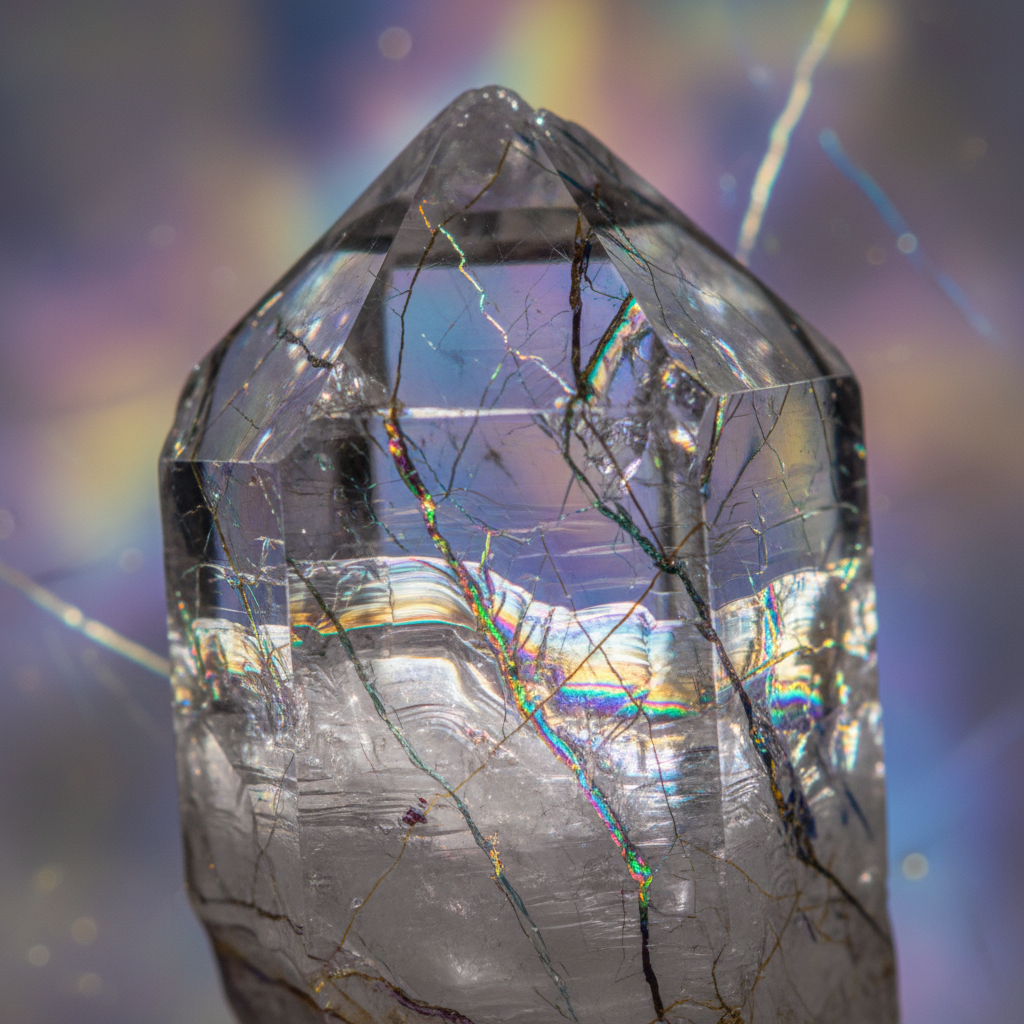
Your application is only as pure as your source material.
Vein reads the mineral language locked inside raw quartz — mapping inclusions, grading optical clarity, and matching slabs to the exact tolerances your application demands.
- OSCILLATOR BLANKS
- FUSED SILICA
- LAPIDARY GRADE
- SPECTROSCOPIC ANALYSIS
- PIEZOELECTRIC TOLERANCE
- OPTICAL CLARITY
- MINE-TO-LAB TRACEABILITY
- SEMICONDUCTOR FURNACE TUBES
- GROWTH STRIATION MAPPING
- INCLUSION CARTOGRAPHY
- THERMAL SPEC MATCHING
- CRYSTAL HABIT GRADING
- OSCILLATOR BLANKS
- FUSED SILICA
- LAPIDARY GRADE
- SPECTROSCOPIC ANALYSIS
- PIEZOELECTRIC TOLERANCE
- OPTICAL CLARITY
- MINE-TO-LAB TRACEABILITY
- SEMICONDUCTOR FURNACE TUBES
- GROWTH STRIATION MAPPING
- INCLUSION CARTOGRAPHY
- THERMAL SPEC MATCHING
- CRYSTAL HABIT GRADING
Three failures every quartz buyer already knows.
Inconsistent purity grades halt your production line.
You spec AT-cut oscillator blanks at ±0.0005" tolerance. The lot arrives. Forty percent fail incoming inspection. Your fab team is idle. Your contract is at risk. The supplier sends a replacement quote.
41% of procurement failures
trace back to undisclosed inclusion density
Overpaying for clarity grades your application never needed.
A jewelry wholesaler buys AAA optical quartz for cabochon work. The lapidary uses 60% of the material. The rest is waste — phantom inclusions and growth veins that would have been invisible in the finished piece.
$2,200–$8,400
average over-spend per lot from mismatched grade selection
Supply chain opacity from mine to your loading dock.
You have a certificate of analysis. It covers the final lot. It tells you nothing about the mine's extraction zone, the processing facility's contamination controls, or the three hands the material passed through.
0 of 12
commodity quartz suppliers offer verified mine-to-lab chain of custody
Three services. Each one closes a gap.
Know exactly what you're buying before the purchase order.
Vein's spectroscopic grading reports map inclusion density, birefringence anomalies, and optical axis orientation for every lot. You receive a structured data package — not a certificate of conformance, but a mineral biography.
99.7%
grade prediction accuracy vs. incoming inspection
< 48h
turnaround on standard grading reports
Trace the chain from extraction zone to your warehouse.
We audit supplier facilities against our 47-point mineral provenance protocol — covering extraction zone documentation, processing contamination controls, and intermediate handler certifications. Every link made visible.
47-point
provenance protocol covering full chain of custody
3 weeks
average audit-to-certification timeline
Match material to tolerance before you commit capital.
Submit your application spec — thermal coefficient, piezoelectric constant, optical transmission window, or lapidary clarity threshold — and we return a ranked shortlist of verified suppliers with margin-to-spec data attached.
340+
verified supplier relationships across 12 source countries
23%
average reduction in per-unit material cost after matching
From specification to verified source in four phases.
Most clients complete the full cycle in under two weeks. Ongoing relationships run on quarterly cadences.
Phase 01
Specification intake
You submit your application datasheet or describe the end-use requirement. We extract the governing tolerances — thermal coefficient, piezoelectric constant, optical transmission window, or clarity threshold.
Phase 02
Lot assessment
We run spectroscopic analysis on your current or candidate material — mapping inclusion density, birefringence anomalies, and axis orientation. You receive a structured grading report, not a certificate.
Phase 03
Supplier matching
Against your spec and grading baseline, we pull verified suppliers from our network — ranked by margin-to-spec, provenance documentation quality, and lead time reliability.
Phase 04
Ongoing audit
For clients sourcing at volume, we maintain a rolling audit protocol — lot sampling, supplier facility reviews, and an annual provenance certification renewal.
What changes when the source material is right.
We had been running incoming inspection failures at 38% for two years. After Vein's spectroscopic grading protocol, we've run three consecutive lots at 100% pass rate. The cost of the assessment was recovered in the first shipment.
Marcus Reinholt
Senior Procurement Manager
Frequency Electronics Group, Mitchel Field NY
I was buying AAA optical for work that genuinely needed A-grade clarity. Vein pulled our spec sheet, mapped it against the actual lapidary yield we were achieving, and showed us we were paying a 40% premium for inclusions that ended up in the offcut bin.
Priya Nambiar
Head of Gemstone Procurement
Nambiar & Sons Wholesale, Chicago IL
The furnace tube application is unforgiving — one contaminated batch and you're looking at a three-week fab line shutdown. The mine-to-lab audit Vein ran on our current supplier found two process gaps we had no visibility on. We fixed them before they became events.
David Osei-Bonsu
Materials Engineering Lead
Apex Semiconductor Fabrication, Austin TX
The right quartz for your application starts with a conversation.
The Buyer's Guide to Quartz Grading Standards
32 pages covering JEDEC oscillator blank grading, optical clarity scales for lapidary applications, and fused silica purity specifications for semiconductor furnace use. The reference document your purchasing team has been missing.
- ◆JEDEC oscillator blank grades explained
- ◆Optical clarity vs. lapidary yield tables
- ◆Fused silica purity levels for fab use
- ◆Inclusion type identification guide